“Happiness is a skill. Happiness is a choice.”
Many years ago I heard the entrepreneur Naval Ravikant say this on a podcast for the first time…and it fundamentally changed how I viewed and understood happiness.
You see, as a kid and even younger adult I never really understood “happiness”.
I mean, it’s not like they ever taught it in school.
I remember even saying to my dad once, “I just want to be happy!”
“Just want to be happy”…what does that even mean?
Nowadays, I cringe at the thought of that, because I had no idea what I was saying.
But stumbling upon Naval, I then took a deep dive into many of his podcasts, some on philosophy, others about wealth.
And I eventually picked up his book: The Almanack of Naval Ravikant (which is really just a summation of many of his best tweets).
This is the book that taught me happiness.

Years later and it still remains one of the most useful books I’ve ever read and continue to re-read to this day.
In fact, I might even put it at the top of my recommended reading list, for anyone who feels stuck in life.
There’s a lot of great information in there than may change not only how you think about happiness, but also money, priorities, and how we spend our time on this planet.
Today, we’ll dive into happiness specifically.
Let’s begin.

Step One - Choosing Happiness
“What do you mean happiness is a ‘skill’?
What do you mean happiness is a ‘choice’?”
Those were my thoughts when I first heard that line.
Because, isn’t happiness supposed to be a feeling or an emotion?
And if you say that happiness is a skill/choice, aren’t you basically implying that I’m currently either choosing to be unhappy or that I suck at the skill of happiness?
The more I sat with this idea, the more it stung - because in my heart I knew it was right.
Whether I was conscious of it or not, throughout my life I had been constantly making choices to be unhappy.
Whether that was by going down a path I didn’t really want to.
Or by choosing to look at something in a cynical or negative way.
Or by surrounding myself with things or people I knew weren’t good for me.
By saying yes to all of those things, I was effectively choosing to be unhappy.
And that was not only my fault, but my responsibility as well.

Because we often attribute happiness to a feeling, we think it’s outside of our control.
That when we’re happy, we’re happy; and when we’re sad, we’re sad.
There’s some truth to this of course, external elements can certainly make us more or less happy.
But when we realize there are many key parts to happiness that actually come down to the decisions we make, how we go about our lives changes completely.
One of my favorite lines from the book is:
“You can increase your happiness over time and it starts by believing you can do it.”
Because, whether we think we can or can’t, we’re right.
So if we want to be more happy in our lives, especially in the long term, it starts by making a conscious decision to choose happiness.
Now, what does “choosing happiness” mean?
Well, one way I like to think of it is: how we interpret what happens to/around us.
Say you get fired or laid off from your job.
There are plenty of ways you can choose to interpret this.
You can say:
“Oh my boss is an asshole!”
“The economy sucks and AI is taking all of our jobs!”
Or, you can choose to interpret things in a way that benefit your mental health.
Instead, you can say:
“Great! I never liked that job anyways. Now I can get started on building the career I’ve always wanted.”
“Perfect! I have all this free time now. I can finally go out and travel!”
What happened to you is exactly the same in both scenarios.
You’re jobless.
However in one, you’re happier, because your choosing to interpret things differently.
That’s one example of how happiness is a skill and a choice.
Because the better you get at choosing to live life in a happier way, the happier you’ll be.
It doesn’t mean we need to go full blown optimist or be naïve to the realities of the cruel world.
It also doesn’t mean lying to ourselves about how we feel in a delusional manner.
Just that we recognize that in one line of thinking, the only one suffering is us, and we don’t have to suffer an extra amount for no reason.
There’s the pain of getting laid off.
And then there’s the second pain of feeling like a failure, hating whoever wronged you, etc - and we can just skip that one.
It might be hard to change your way of thinking at first, but it’s a skill and we can get better at it.
So guaranteed, there are things you are doing in life right now that are currently making you unhappy or less happy than you could be.
But imagine if you were more honest with what you wanted and acted accordingly.
Imagine if you learned to see everything for what it was, not just the negatives.
Imagine if, in every situation you were able to choose happiness.
It’s then happiness becomes something we cultivate and get better at, rather than something we are blessed with when things magically work out.
Whether you believe it or not, you can choose to be happy in any given moment.
Because if you believe it’s a choice, then you can start working on it.

Step Two - Building Happiness
Now that we’ve chosen happiness, the next step is to build happiness.
A lot of people don’t know, but: “Happiness is built by habits.”
The little things we do on a day to day basis without thinking dictate a large majority of our lives.
And if we habitually act or think in a way that make us less happy, we’ll naturally be less happy, right?
So building happiness means changing, removing, or adding habits that contribute to a more happy or peaceful existence.
One thing that’s helped me was to think of happiness as a spectrum.
On one side is “unhappiness”, the other side is “happiness”.
You can also think of “unhappiness” as “less happy”, if that helps.
As we go through life, our happiness meter fluctuates between these two spectrums of happiness and unhappiness.
The more we surround and fill our lives with things and activities that make us happy, the more this meter stays on the side of happy.
Similarly, the more we surround ourselves with things that make us unhappy, the less happy we’ll be.
Simple, right?
So it’s not a binary question of: “Are you happy?”
It’s more a question of: “How happy are you?”
If you want to increase your happiness meter, first learn what makes you happy.
Then, make small incremental changes within your life to fill your day up with as more of that.
For example, this may mean saying no to going out on a Friday night because you’d rather stay at home and make a cup of hot chocolate.
It could also mean half-assing your way to the gym because you know getting this workout in will benefit you in the long run, even if you don’t want to do it now.
Building happiness habits is just as much about understanding your preferences, as it is about knowing what’s good for you long term.
Many people get stuck here because they think it’s permission to endlessly gratify themselves.
But too much of something can still make us feel bad, guilty, or ashamed.
Just because ice cream makes us happy, it doesn’t mean we should have it every day.
So we have to be careful about that; it can’t be all pleasure and fun seeking.

Happiness is as much of being responsible for your life as it is doing the things you love.
It means prioritizing the long term over the short term, and doing what you know will make you feel better tomorrow, rather than today.
This also means learning to say no to the things that make you marginally happy for the few things that make you overwhelmingly happy (priorities).
Happiness is in many ways, life management.
And although the habits can take some time to build, it’s worth it - because once you get them down, it takes less and less effort to be more and more happy.

Step Three - Limiting Desires
Another line that belongs on the list of quotes that have fundamentally changed my life is:
“Desire is a contract you make with yourself to be unhappy until you get what you want.” - Naval
This is simple Buddhist wisdom, “desire is suffering”, but I think the way it’s phrased makes so much sense.
Whenever we set a goal or say we want something, it places our current life into a state of missing or lack.
Before, we were fine.
But now, because we say we want this thing, our current state becomes “me without the thing”, rather than just “me”.
For example, if I say I want this new camera, then until I get that camera, my life will not simply be in a neutral state - it’ll be my life without that camera.
Whereas if I didn’t say I wanted that camera in the first place, there wouldn’t be anything missing from that equation.
Every time we say we want something, we are signing ourselves up to be unhappy, by placing ourselves in a state of lack.
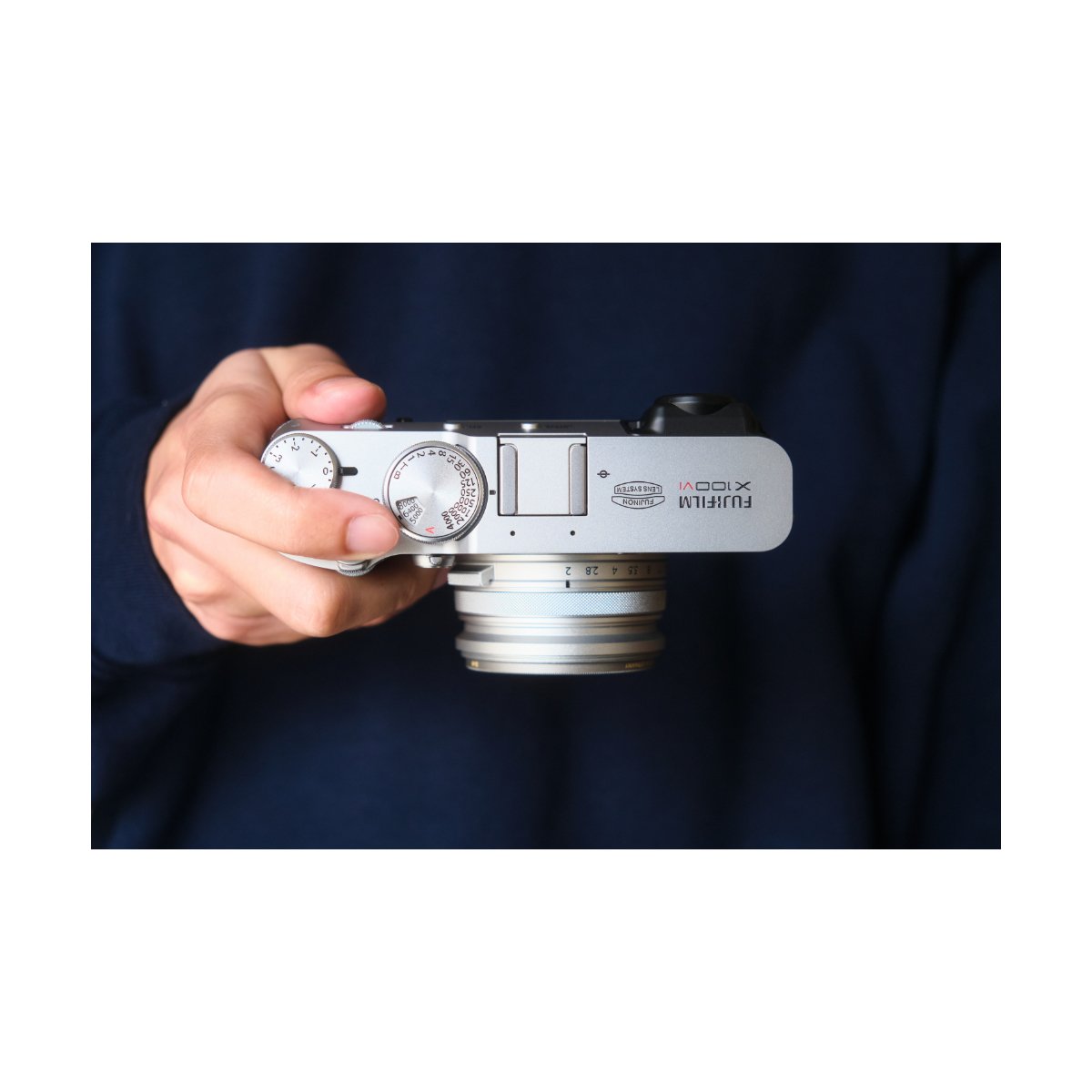
Now this doesn’t mean we have to stop wanting stuff entirely.
Because, we’re humans, so it’s okay to be human.
Just that: the less we want the happier we’ll be.
The key is limiting the amount of desires we have to just a few important ones.
Because the more desires we have, the more contracts of unhappiness we take on.
It’s like getting a loan for three different cars when we can barely afford one.
The more we take on, the more miserable we’ll be.
However, we can choose to limit what we want and to what degree.
Naval’s recommendation is to pick one or two overarching desires - and forget the rest.
The others will carry with them too much of a happiness tax, and you’re unlikely to get them all anyways.
But if you focus on just one or two, you can make it happen.

I always think back to the old story of Socrates, the Greek philosopher.
It’s said that one day he was walking through a marketplace in Athens.
There, he was surrounded by countless goods and luxuries from all sorts of places.
But instead of looking around thinking about all the things he wanted to buy, he said:
“How many things there are that I do not need!”
By choosing to not want anything, he simultaneously chose happiness, by limiting his desires.
The easiest way to get something is by not wanting it in the first place, right?
When you look around and realize just how many things there are that you don’t want, you’ll begin to appreciate all the things you do have.
And, you might also realize that you actually need much less than you once thought.
Another banger quote by Naval:
“Happiness is what’s there when you remove the sense that something is missing in your life.”

Step Four - Managing Expectations
A big misconception many people have is they think getting something can and will make them permanently happy.
“Getting this”, “accomplishing this”, “if I just had this”.
We have this fantasy in our heads that once we get to that place or finally have that thing, that everything will be great forever.
And we look at others who are unhappy and say, “Why are you complaining? If I had what you had, I’d be happy!”
These are all symptoms of a fundamental misunderstanding of how the human brain works.
In fact, there’s a common example in human psychology called the Gold Medal Syndrome.
This phenomenon describes the event where a top tier athlete finally accomplishes their goal, winning the Olympic gold medal, one of the highest athletic achievements possible.
But instead of the great joy of getting the thing they’ve always wanted, many athletes experience a post-accomplishment depression and emptiness.
Because…you’ve finally did the thing you’ve been training all your life for.
But…now what? What’s next?
And what could possibly top winning a gold medal?
With great irony, your purpose and meaning in life is gone - because you achieved it.
In fact, the most accomplished swimmer of all time Michael Phelps said after winning four gold medals at the 2012 London Olympics:
“I fell into a major state of depression. That was probably the hardest fall for me. I didn’t want to be in the sport anymore. I didn’t want to be alive anymore.”

In fact, Gold Medal Syndrome extends and apply to many of us, who aren’t even chasing a gold medal.
Any goal, dream, or problem you solve opens you up for disappointment.
Marriages for example are often romanticized as the end goal in a lot of modern media.
But the reality is: there’s a lot of problems after marriage as well.
The current divorce rate in America is nearing 50%.
Naval has a great line for this:
“The fundamental delusion: there is something out there that will make me happy and fulfilled forever.”
At the end of every problem is just another problem.
And no matter how much stuff we get, how much we accomplish, or how much we solve, we quickly adapt to our circumstances - that’s the hedonic treadmill.
The joy we experience is momentary.
Happiness is fleeting, and the feeling doesn’t last forever.
So what do we do?
If I’m not happy now, and accomplishing my dreams won’t make me happy - what am I supposed to do?
Well, of course I don’t bring this up to say you shouldn’t solve your problems or chase your dreams.
In fact, like in the last chapter where we learned to manage our desires to just one or two, we can do the same here, and learn to manage our expectations.
One way is by letting go of the idea of “problems” to begin with.
Just like we can discard desires by saying we don’t want something, we can discard problems by not considering them problems.
Because a problem is only a problem if you think it’s a problem.
So if we can see through the game, realize how it works, and understand we’re not doing this to be “permanently happy”, this is just what we do and something we want to do, we can manage our expectations appropriately.
“I want this thing.
I know it’s not going to make me happy forever.
But that’s okay, I’m still gonna get it.”
That way, we’re not expecting this to be the permanent solution.
We can’t control the fact that there’s a bit of a disappointment to every accomplishment.
But we can remind ourselves, do it anyways, and the empty feeling will be much less.
Jimmy Carr has a great line:
“Happiness is reality minus expectations.”
So, that’s the book that taught me happiness, and how I manage it now.
Of course this doesn’t mean I’m permanently happy all the time, we covered why that’s impossible.
But I’m dramatically more happy than I was before, and I don’t consider being unhappy, or “the lows” to be a problem.
If you can do any one of these four: choosing happiness, building happiness, limiting desires, and managing expectations, I think you have a good shot at being happier in life.
If you want the book, I think it’s available online (I’m not getting paid to say this).
I think it’s worth reading and there are plenty of more gems in there.
If you have a friend who’s currently struggling with happiness, send them this, it might help.
If you have any tips of your own, things that have really worked to make you more happy, share them in the YouTube comment section.
If you’re interested in photography, subscribe to the channel, that’s actually primarily what we talk about here.
Thanks for reading, thanks for your time, good luck.